


Read below and discover how do trees help change climate
Climate change is a reality, and it affects everyone around the world. While cutting back on sources of pollution is one strategy to deal with climate change, planting more trees is considered a better and long-lasting solution. Read below to find out how trees help combat climate change.
Trees Purify Air
- In the present day, CO2 is found abundantly almost everywhere on Earth. It is one of the harmful gases produced as a result of combustion, be it from vehicles, industries, or a forest fire. CO2 is lighter than air, and it goes towards the upper atmosphere. There it acts as a blanket around the Earth, trapping heat.
As a result, we experience an annual increase in temperature. This annual temperature increase results in other problems such as irregular weather patterns, heat waves, floods, and damage to the natural ecosystem.
- Trees require CO2 from the atmosphere as an essential component for photosynthesis. As a result of photosynthesis, trees produce energy for themselves alongside oxygen and water. If enough trees are planted, then the excess CO2 from the atmosphere can be absorbed quickly, thus having a purifying effect.
Trees Act As Natural Air Conditioners
- Trees produce oxygen and water from photosynthesis. The tree leaves have tiny openings called stomata. Water exits the leaves via stomata. This effect results in the general cooling of the environment.
Contrary to trees, civil infrastructure, including asphalt roads, tends to absorb heat. These structures then radiate heat, even during nighttime, thus making the environment warmer.
- If enough trees are planted, this heating effect can be minimized. Trees should be kept in good shape for optimal growth. Regular pruning keeps the trees healthy. Hire a professional tree pruning company so trees in urban settings can be pruned for maximum growth.
Trees Conserve Water
- A typical tree requires almost 15 gallons of water per day to function normally; however, the same tree gives back about 200-450 gallons of water to the environment daily.
If the tree has an adequate leaf cover, its shade helps protect the ground and the vegetation around its trunk. The shade prevents direct sunlight from reaching the ground, and as a result, evaporation is slowed down. As a result, the soil remains moist for a longer period.
Trees Filter Water & Prevent Water Pollution
- The trees’ water cycle helps filter and conserve water. For example, the tree roots can absorb contaminated water from the soil, and filtered water vapors exit the tree leaves after photosynthesis.
Similarly, stormwater contains high levels of contaminants such as nitrogen and phosphorus. Trees help reduce the impact of rainfall on the soil and promote its absorption into the soil. In this way, trees prevent stormwater from directly polluting the oceans and rivers.
Trees Protect Soil & Prevent Soil Erosion
 The tree root system is essential for absorbing water from the soil. The intricate web of roots helps to keep chunks of soil together. While this webbing of roots supports the tree, it also helps keep the soil in place.
Most tree roots travel several meters down and across from where the tree is located. If the area experiences unexpectedly high levels of rainfall, this root system helps prevent soil erosion.
- The tree’s leaf cover also prevents soil erosion, especially if the soil is bare around the tree. The leaves act as a partial barrier against the rainfall, thus reducing the speed and force of the rain droplets. Hence, the damage to the soil is minimized, and soil erosion is prevented. It is essential to correctly prune the tree, so it does not lose more of its leaf cover than required.
A professionally pruned tree is your best defense against climate change and its negative effects. Hence, it is recommended to hire a professional tree pruning company. We at American Tree Experts Inc offer various services, including pruning, nutrient management, and pest control. So call us today at 973-744-6091 and let us help you keep your trees healthy.


 Aphids are sap-sucking tiny insects, more commonly known as blackflies and greenflies. They are among the most invasive pests and affect cultivated plants in temperate climate regions. In addition to feeding on the plant’s sap, they also act as transmitters of plant diseases, especially viruses. These
 The red elderberry is native to Asia, Europe, and the USA. It is a tree shrub that produces small fruits. These trees attract a lot of birds and small wildlife. It is a fast-growing tree that reaches a height of 12 meters when fully matured. It is often planted for its beautiful flowers and its attractive appearance.
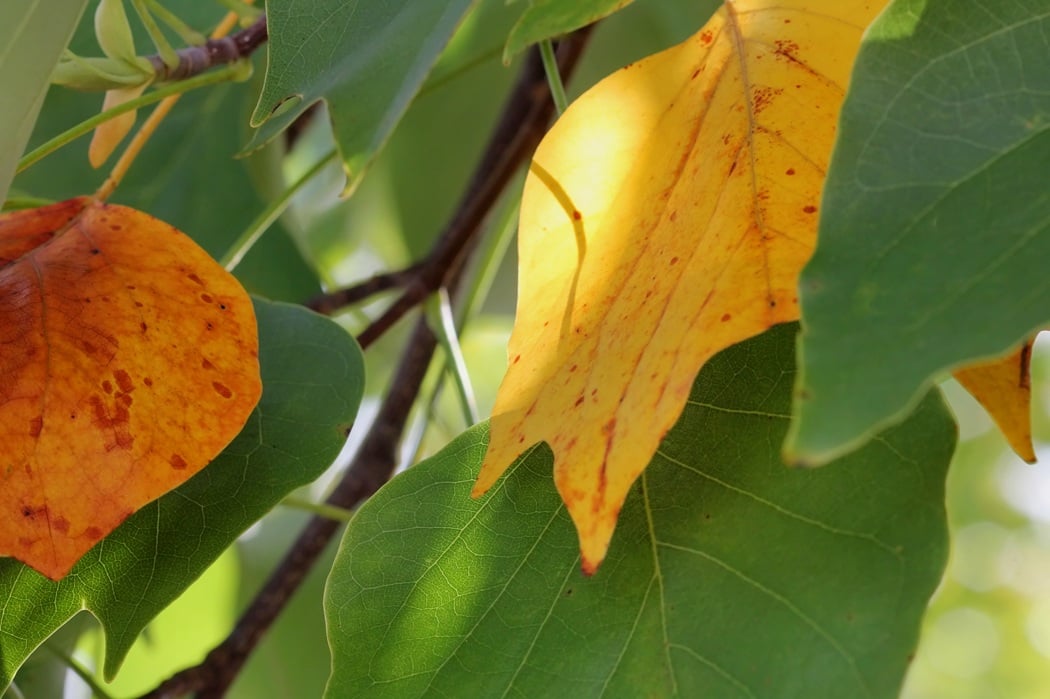
 During a normal growth lifecycle, leaves change color. They start as light green, become dark green when fully matured, and turn yellow or brown when they are about to fall. Some trees have leaves of different colors and are planted for their ornamental beauty.
 )
)
 The Golden Rain Tree is named after its summer season blooming flowers. The flowers are shaped like stars which attract bees and butterflies for their pollen. During the summer season, when these flowers fall they resemble a golden shower, hence the name Golden Rain Tree.
 For a tree cutting project, never work alone. Even if you think you don’t need any help, it is best to have someone around. They can warn you if they spot any
 Thinning prune method is used to fix this problem. The branches, even if they are living, are cut around the edges of the tree cover. This is a preferred pruning method for trees having a high degree of foliage, stems, and leaves. For best results, consider hiring the services of a
 Dogwood is a flowering tree that not many people know can be planted in their gardens. Not only does the tree have beautiful flowers and berries but it has interesting branching that comes out during winter shedding.