

Here is a list of trees you should never grow or plant in your yard
Trees not only add to the aesthetic appeal of your yard but can offer several benefits, such as attracting wildlife, providing fruits and seeds, providing shade, and pleasant fragrances due to their flowers.
Although care and maintenance are necessary for all trees, some of them require extra maintenance. Read on below to learn about the trees you should never grow in your yard.
Southern Magnolia (Magnolia grandiflora)
- The southern magnolia tree is regarded as one of the most beautiful trees in the world. During breezy summer days, one can hear a distinct sound as the wind blows through this tree. It produces large white flowers that have a pleasant fragrance. Its seeds are cherry red, and the bark has a unique texture.
The tree sheds a considerable amount of bark, twigs, and leaves. Its leaves are crisp and waxy even when green, thus making them very difficult to rake. The flower’s petals are leathery, wet, and tough. If you mow over them, they can collect and get stuck under, thus affecting the mower blades. For proper tree management, one should hire a professional tree pruning service as they have all the required tools and expertise.
Sweet Gum (Liquidambar styraciflua)
- The sweet gum tree is a famous ornamental tree. Its autumn foliage is very similar to the maple tree and has a magnificent display of colorful leaves. It adds to the aesthetic beauty of one’s yard and is easily distinguishable from other autumn trees.
The tree gets its name from its seeds and fruit, commonly known as gum balls. They have spikes on them and aren’t edible, either. Each year, a typical tree sheds thousands of such balls.
- These balls are brown, hard, and spiky. They are a serious safety hazard. They can cause you to slip and fall if stepped on. These balls are impossible to rake and can only be picked up by hand. They cannot be mowed, as they will damage the lawn mower. If they become airborne, they are dangerous if they hit someone. It is difficult to get rid of them in the compost as well.
Pecan (Carya illinoinensis)
- The Pecan tree is famous for its delicious nuts. The Pecan wood gives off a pleasant fragrance when burnt. If used as firewood for baking and cooking, it gives the meat a savory flavor. Despite its unique advantages, one should avoid planting the Pecan tree in their yard.
The Pecan tree is known to shed everything, its leaves, bark, branches, and nuts. As the tree grows older, its branches become brittle and are easily broken. If there is a big thunderstorm, then you should expect to see broken branches in your yard. This presents itself as a safety hazard.
- The Pecan tree also sheds a huge amount of leaves. These leaves cause litter as well as block drains. Since the tree’s leaves are small, they can easily find their way into crevices on your car and cause problems.
Oak (genus Quercus)
- The great Oak tree is famous for its magnificent size, incredible shade, and exciting folklore and stories surrounding it. Oak trees might seem like a good choice for your yard, but they can cause many problems.
Oak trees are susceptible to pests and infections. Therefore, you must exercise precautions and take good care of your oak tree. If its branches become infected, they are at the risk of dropping and causing safety. A storm might also cause the branches to fall, posing a danger to you and your property.
Northern Catalpa (Catalpa speciosa)
 The Northern Catalpa tree is also commonly known as the Catawba tree. It is a very common tree, to the point that it is considered a weed in certain places. The tree’s leaves are heart-shaped and large which is an amazing sight. The tree produces fluffy white flowers and long and skinny seed pods and usually has a lot of catalpa worms.
The tree attracts many worms and caterpillars that feast on its leaves and seeds. The tree is known to shed everything, its leaves, bark, twigs, and even branches. It is relatively difficult to clean up, especially after a period of heavy breeze and thunderstorms.
Cottonwood
- Cottonwood is a famous yard tree and is preferred by many homeowners due to its pleasant appearance and low maintenance. However, it should be avoided at all costs. It has a soft and shallow root system, which is susceptible to damage by strong winds and thunderstorms. Its wood is also prone to damage by rotting.
Cottonwood is also highly susceptible to being infected by pests and diseases. There have been many instances of a cottonwood tree falling and damaging someone’s car, garage, and even the house’s roof.
Bradford Pear
- While the Bradford Pear is often regarded as an exotic tree due to its unique appearance, it has a very frail structure. The tree is very common in the United States and is considered a low-maintenance and durable tree.
The tree assumes a pyramid-like shape as it reaches maturity, and this shape makes it prone to being damaged by strong winds and thunderstorms. While hiring the services of a professional tree pruning company can help prevent this, it is still recommended to avoid planting it in your yard.
Mimosa Tree
- The Mimosa tree has an exceptionally soft wood that is prone to rotting and disease. Webworms are known to infect this tree, thus causing its branches to break and fall unpredictably.
The Mimosa tree also produces a huge number of quick germinating seeds and, if left unchecked, can spread very quickly around your yard.
Mulberry Tree
- If you suffer from pollen allergies, then you should avoid planting the Mulberry tree in your yard. This tree is known to produce vast amounts of pollen. This tree also attracts insects and pests, especially silkworms.
Mulberry trees offer excellent shade and are pretty sturdy. However, be prepared for a swarm of insects in and around your house.
Chinese Tallow
- The Chinese Tallow is commonly known as the Popcorn tree due to the appearance of its flowers. It has broad leaves which offer a fantastic shade during bright sunny summer days. Its leaves become brightly colored during autumn, which is a pleasant sight.
The Chinese Tallow is an invasive species as it grows uncontrollably if not kept in check. It can reach a height of 40 feet and a width of 30 feet and develop a deep and diverse root system that can affect the other plants in your yard.
Norway Maple
- While the Norway Maple isn’t indigenous to the United States, it is one of the most commonly planted trees. While it has an excellent shade, it prevents other plants and shrubs from growing around it.
This is due to the dense shade that prevents sunlight from reaching these plants and its extensive root system that increases competition for water and minerals in the soil.
Eucalyptus
- Most homeowners prefer planting a Eucalyptus tree due to its pleasant fragrance and its extract that has medicinal and herbal properties.
Eucalyptus requires a lot of maintenance and can grow uncontrollably into a massive tree if not pruned on time.
Quaking Aspen
- While the Quaking Aspen is a beautiful and durable tree, its roots require ample amounts of water and minerals to enable the tree to survive. You will be required to regularly mix fertilizer and nutrients in the soil and ensure it gets enough water.
If this is not the case, the tree’s roots will make it difficult for other plants in your yard to thrive.
Weeping Willow
- The Weeping Willow gets its name from its long and slender branches that give it the appearance of crying. While the tree is visually appealing, it requires a huge amount of water to thrive.
This tree will make it harder for other plants and trees in its vicinity to survive as its roots will increase the competition for nutrients and minerals in the soil.
Linden (Tillia)
- The Linden tree is popular among homeowners for its shade and beautiful flowers. However, it attracts aphids and secretes a sticky sap that is difficult to clean from floors and cars.
If you require professional tree pruning services, then why not get in touch with us? We at American Tree Experts Inc are a team of tree specialists. Contact us today at 973-744-6091 for a free quote.

 Stump Grinding is a quicker process as compared to stump removal. Unless you are specifically trained and have previous experience, we would not recommend doing it as a DIY project. It is best to hire a professional company.


 The Big Leaf Mahogany is native to Central America. Since the 1950s this tree’s population has declined by 70% and is now considered one of the endangered trees. This is due to weak regulations for the prohibition and prevention of deforestation. The wood of this tree is famous for making fine quality furniture since the 16th century. The main qualities of this tree’s wood include resistance to rot, durability, and exceptional strength.
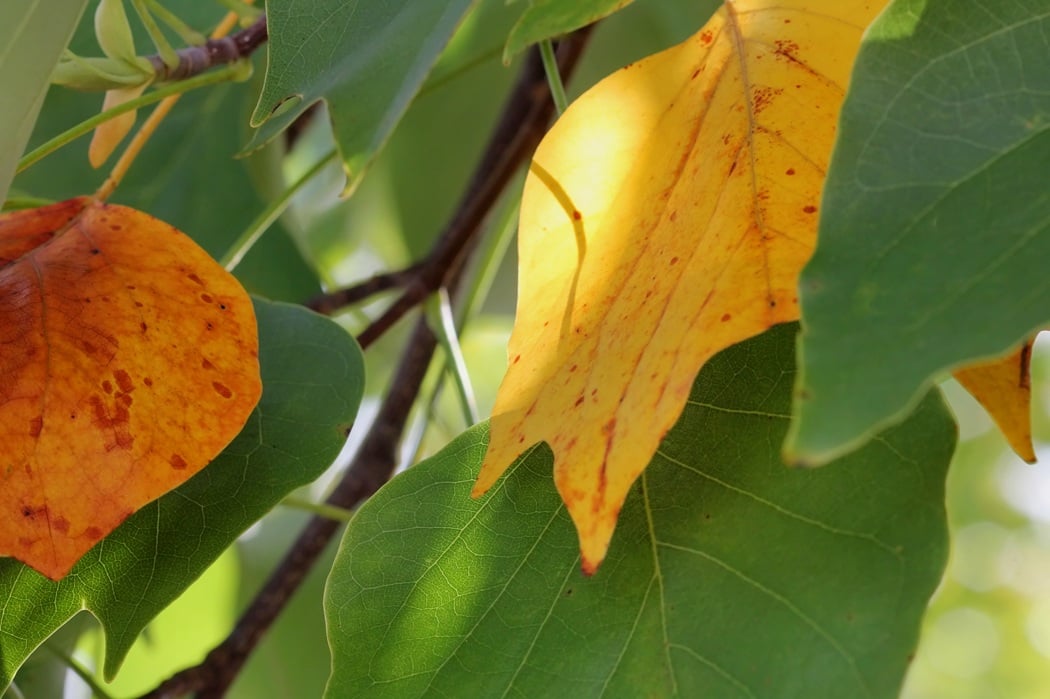

 During a normal growth lifecycle, leaves change color. They start as light green, become dark green when fully matured, and turn yellow or brown when they are about to fall. Some trees have leaves of different colors and are planted for their ornamental beauty.
 )
)
 The Golden Rain Tree is named after its summer season blooming flowers. The flowers are shaped like stars which attract bees and butterflies for their pollen. During the summer season, when these flowers fall they resemble a golden shower, hence the name Golden Rain Tree.
 For a tree cutting project, never work alone. Even if you think you don’t need any help, it is best to have someone around. They can warn you if they spot any
 Thinning prune method is used to fix this problem. The branches, even if they are living, are cut around the edges of the tree cover. This is a preferred pruning method for trees having a high degree of foliage, stems, and leaves. For best results, consider hiring the services of a