
Table of Contents
How Arborists Diagnose Tree Nutrient Deficiencies in Montclair, NJ
For homeowners in Montclair, NJ who are noticing yellowing leaves, thinning canopies, dead branches, or trees that simply do not look healthy anymore, figuring out what is actually wrong can feel frustrating fast. Many tree problems look similar at first glance, and too many property owners waste money treating the wrong issue or waiting too long while the damage spreads. That is where experienced professionals like American Tree Experts can help. With decades of experience working with New Jersey’s trees and soil conditions, their team uses detailed inspections, soil analysis, and arborist expertise to identify nutrient problems before they lead to serious tree decline.
A lot of homeowners assume trees can survive on their own forever. In some cases, they can. But in older communities like Montclair, trees deal with a surprising amount of stress.
Due to compacted soil, winter road salt exposure, construction damage, unpredictable rainfall, and aging root systems, nutrient deficiencies are becoming more common across Essex County properties. Many nutrient problems mimic disease or pest infestations. A tree with yellow leaves may not actually be sick. It may simply be unable to absorb iron because the soil pH is off. That distinction matters.
Why Tree Nutrient Problems Are Common in Montclair, NJ
Montclair has one of the most mature urban tree canopies in northern New Jersey. Large maples, oaks, dogwoods, and ornamental trees line streets and shade older homes. While beautiful, mature trees require consistent monitoring because decades of environmental stress slowly affect soil quality and root health. Several local factors contribute to nutrient deficiencies:
- Soil compaction from sidewalks, driveways, and foot traffic
- Winter road salt exposure
- Poor drainage in certain neighborhoods
- Construction near root zones
- Acidic or imbalanced soil pH
- Competition from turf grass for nutrients and water
The result? Trees struggle to absorb the nutrients they need, even when those nutrients technically exist in the soil. According to the International Society of Arboriculture, nutrient deficiencies are often connected to broader environmental stress, not just a lack of fertilizer.
Signs Your Tree May Have a Nutrient Deficiency
Tree nutrient problems usually appear gradually. Many homeowners in Montclair notice something “looks off” months before they call an arborist.
Yellow Leaves and Chlorosis
- One of the most common symptoms is chlorosis, which causes leaves to yellow between the veins while the veins remain green. This is especially common in pin oaks and maple trees growing in high-pH soil. Iron deficiency is often the culprit.
Thin Canopies and Slow Growth
If your tree is producing fewer leaves each year or developing sparse branches near the top, nutrient uptake issues could be limiting healthy growth. Some homeowners mistake this for seasonal stress. Sometimes it is. But when the problem repeats year after year, there is usually something deeper happening underground.
Early Leaf Drop and Dead Branches
- Premature leaf drop during summer is another major warning sign. Dead tips, brittle branches, and thinning limbs often indicate long-term nutrient stress combined with environmental pressure. In Montclair neighborhoods with older trees, this is extremely common after periods of drought followed by heavy rain.

How Arborists Diagnose Tree Nutrient Problems
Professional arborists do not guess. They follow a step-by-step diagnostic process to determine what is stressing the tree and whether nutrients are actually the issue.
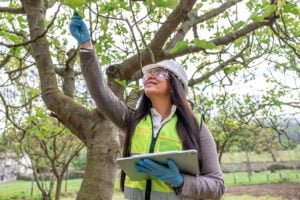
Step 1: Visual Tree Inspection
The first step is a complete visual assessment. An arborist examines:
- Leaf color and size
- Canopy density
- Bark condition
- Branch dieback
- Growth patterns
- Root flare visibility
- Signs of insects or disease
Certified arborists are trained to identify subtle patterns homeowners often miss. For example, nutrient deficiencies usually affect leaves in very specific ways. Nitrogen deficiency often creates widespread pale foliage, while iron deficiency typically causes interveinal yellowing near newer leaves. This inspection also helps rule out unrelated problems like borers, fungal infections, or drought stress.
Step 2: Soil Testing and pH Analysis
This is where diagnosis becomes far more precise. Soil samples are collected around the tree’s root zone and analyzed for:
- Nitrogen levels
- Phosphorus
- Potassium
- Micronutrients like iron and manganese
- Organic matter content
- Soil pH
In Montclair, soil pH issues are surprisingly common. Even if nutrients are technically present, trees cannot absorb them properly when the soil becomes too acidic or too alkaline. Arborists may recommend lime applications, sulfur treatments, or specialized deep-root fertilization depending on the results.
The USDA Natural Resources Conservation Service notes that soil structure and pH significantly influence nutrient availability for plants and trees.
Step 3: Checking for Root Damage and Compaction
Healthy roots are essential for nutrient absorption. Arborists inspect the area surrounding the tree for:
- Soil compaction
- Root girdling
- Construction damage
- Drainage issues
- Buried root flares
Many tree problems start below the surface long before visible symptoms appear. A homeowner might fertilize repeatedly without realizing the roots physically cannot absorb nutrients because the soil is compacted like concrete. This happens often near driveways, sidewalks, patios, and heavily trafficked lawns.
Step 4: Tissue and Laboratory Testing
If the issue is still unclear, arborists may collect leaf or twig samples for laboratory analysis. These tests help confirm:
- Internal nutrient levels
- Disease presence
- Fungal infections
- Hidden pest activity
Lab testing becomes especially important when symptoms overlap between nutrient stress and disease. For example, leaf discoloration may stem from anthracnose disease rather than nutrient deficiency alone.
Why Nutrient Problems Are Often Misdiagnosed
One of the biggest mistakes homeowners make is assuming fertilizer solves everything. It usually does not. Overfertilization can actually worsen stress, especially in mature trees already struggling with root damage or poor soil drainage.
Too many homeowners spend hundreds on store-bought fertilizers only to discover the real issue was compacted soil or improper pH balance. This is why certified arborists focus on diagnosis first and treatment second.
Common Nutrient Deficiencies Found in New Jersey Trees
Nitrogen Deficiency
Nitrogen shortages often cause pale green leaves, reduced growth, and smaller foliage. This commonly appears in lawns where grass competes aggressively with tree roots.
Iron Chlorosis
Iron chlorosis is extremely common in New Jersey landscapes with alkaline soil. Symptoms include:
- Yellow leaves with green veins
- Weak canopy growth
- Branch decline
Pin oaks are especially vulnerable.
Potassium and Phosphorus Issues
Potassium deficiencies weaken overall tree resilience, while phosphorus problems affect root development and energy transfer. Trees with these deficiencies often struggle during drought or harsh winters.
Why Hiring a Certified Arborist Matters
- Tree health problems are not always obvious. An experienced arborist understands how soil, climate, pests, diseases, and environmental stress all interact. They can identify the true source of the problem instead of masking symptoms temporarily.
According to the Montclair Township Shade Tree Division, maintaining healthy trees is critical for preserving community safety, property value, and environmental quality throughout the township. Certified arborists also understand local species common to Essex County neighborhoods and how New Jersey weather patterns affect long-term tree health.
How American Tree Experts Helps Montclair Homeowners Protect Their Trees
For decades, American Tree Experts Nutrient Management Services has helped homeowners throughout northern New Jersey diagnose and correct tree health problems before they become irreversible. Their team evaluates the entire environment surrounding the tree, not just the visible symptoms. That includes soil conditions, root health, environmental stress factors, and long-term nutrient management planning.
Because many nutrient deficiencies develop slowly, early diagnosis often saves homeowners thousands of dollars in removals or emergency tree work later.
Frequently Asked Questions
Why is an arborist the best professional for tree health issues?
Certified arborists are trained to diagnose complex tree problems involving soil conditions, nutrient deficiencies, disease, pests, and environmental stress. Unlike general landscaping services, arborists use scientific testing and species-specific knowledge to identify the actual cause of decline.
How much does a tree assessment cost in NJ?
Tree assessment costs vary depending on the size of the property, number of trees, and whether laboratory testing is needed. Basic inspections may cost less than comprehensive diagnostic evaluations involving soil or tissue analysis.
How do arborists test trees for disease?
Arborists inspect visual symptoms, assess environmental conditions, collect soil samples, and may send leaf or twig tissue to laboratories for advanced testing. This helps distinguish disease from nutrient deficiencies or pest activity.
Protect Your Trees Before Small Problems Become Expensive
Tree nutrient problems rarely fix themselves. In fact, many issues become harder and more expensive to correct once decline spreads through the canopy or root system.
If your trees are showing signs of yellowing leaves, thinning branches, poor growth, or stress, the team at American Tree Experts can help diagnose the problem and create a customized nutrient management plan for your property.