
If you’re a homeowner in Montclair or anywhere in northern New Jersey who treasures the mature trees on your property, this guide is for you. Many property owners don’t realize their trees are under stress until insects appear, leaves begin dropping, or branches start dying back. By that point, what looked like a minor issue can become an expensive problem. At American Tree Experts, a family-owned company serving New Jersey since 1934, experienced arborists help homeowners identify the underlying causes of tree stress, treat pest problems early, and restore long-term tree health before damage becomes irreversible.
Table of Contents
A Healthy Tree Is Naturally Resistant to Pests
Insects don’t usually attack the healthiest trees first. Much like our immune systems, trees have natural defenses that protect them from insects, fungi, and diseases. Healthy trees produce protective chemicals, resins, and other compounds that discourage pests from feeding or laying eggs.
When a tree becomes stressed, however, those defenses weaken. The tree shifts its energy toward survival rather than protection, creating an opportunity for insects that are constantly searching for vulnerable hosts. That is why pest infestations are often a symptom of a larger health problem rather than the original cause.
Why Does Tree Stress Attract Pests?
One of the most common questions homeowners ask is, “Why do insects seem to find weak trees so quickly?” Researchers have found that stressed trees produce chemical compounds known as volatile organic compounds (VOCs). These chemicals act like distress signals that many insects can detect from surprisingly long distances.
At the same time:
- Trees produce less protective resin and defensive compounds.
- Sap often contains higher concentrations of simple sugars, making it more attractive to sap-feeding insects.
- Cracks and damaged bark provide easy entry points for insects and pathogens.
- Reduced vigor limits the tree’s ability to recover from insect feeding.
For pests, a stressed tree is simply an easier target.
What Causes Tree Stress?
Tree stress rarely has one single cause. More often, it’s the result of several environmental and human-related factors working together.
Drought and Improper Watering
- New Jersey summers have become increasingly unpredictable. Long dry periods followed by heavy rain can be hard on trees. Both underwatering and overwatering damage root systems. Without healthy roots, trees struggle to absorb nutrients and defend themselves against insects.
Soil Compaction
Many suburban yards experience heavy foot traffic, parked vehicles, construction work, or repeated lawn equipment use. Compacted soil reduces oxygen around roots, making it difficult for trees to absorb water and nutrients. This is especially common around mature shade trees in established neighborhoods like Montclair.
Heat Stress
- Trees growing near driveways, sidewalks, patios, or roads experience significantly higher temperatures than those in natural forest settings. These “heat island” conditions increase water loss while also speeding up insect development and reproduction.
Nutrient Deficiencies
A tree lacking essential nutrients simply cannot produce the energy needed to maintain healthy growth and natural defenses. Poor soil quality often contributes to declining tree health over several growing seasons.
Mechanical Damage
It happens more often than people realize. Wounds caused by mechanical damage become an entry point for insects and disease-causing organisms. Some examples of mechanical damage are as follows:
- A lawn mower bumps the trunk.
- A string trimmer removes bark.
- Construction equipment scrapes major roots.
Storm Damage
Broken limbs, cracked bark, and split branches create stress and expose fresh wood, which attracts wood-boring insects. After severe weather, it’s important to have damaged trees inspected promptly.
Common Pests That Attack Stressed Trees
Different insects target different tree species, but many prefer trees that are already weakened. Some common examples in northern New Jersey include:
Emerald Ash Borer
- This invasive beetle attacks stressed ash trees by tunneling beneath the bark, disrupting the tree’s ability to move water and nutrients. Without treatment, infestations are often fatal.
Hemlock Woolly Adelgid
A serious pest of eastern hemlocks, woolly adelgid feeds on tree sap and causes gradual decline. American Tree Experts has extensive experience treating hemlocks affected by this destructive insect.
Aphids
- Aphids feed on plant sap and multiply rapidly during periods of tree stress. Heavy infestations often leave behind sticky honeydew that attracts ants and promotes sooty mold growth.
Scale Insects
Scale insects attach themselves to bark, twigs, and branches while feeding continuously on sap. Because they often blend into bark, homeowners may not notice them until damage becomes obvious.
Bark Beetles
- While bark beetles are more commonly associated with western forests, stressed ornamental trees can also become vulnerable to certain bark-boring species.
Signs Your Tree May Be Stressed Before Pests Take Over
Catching stress early is the best way to prevent expensive infestations. Watch for signs such as:
- Smaller than normal leaves.
- Early leaf drop.
- Thin or sparse canopy.
- Dead branches.
- Cracks in the bark.
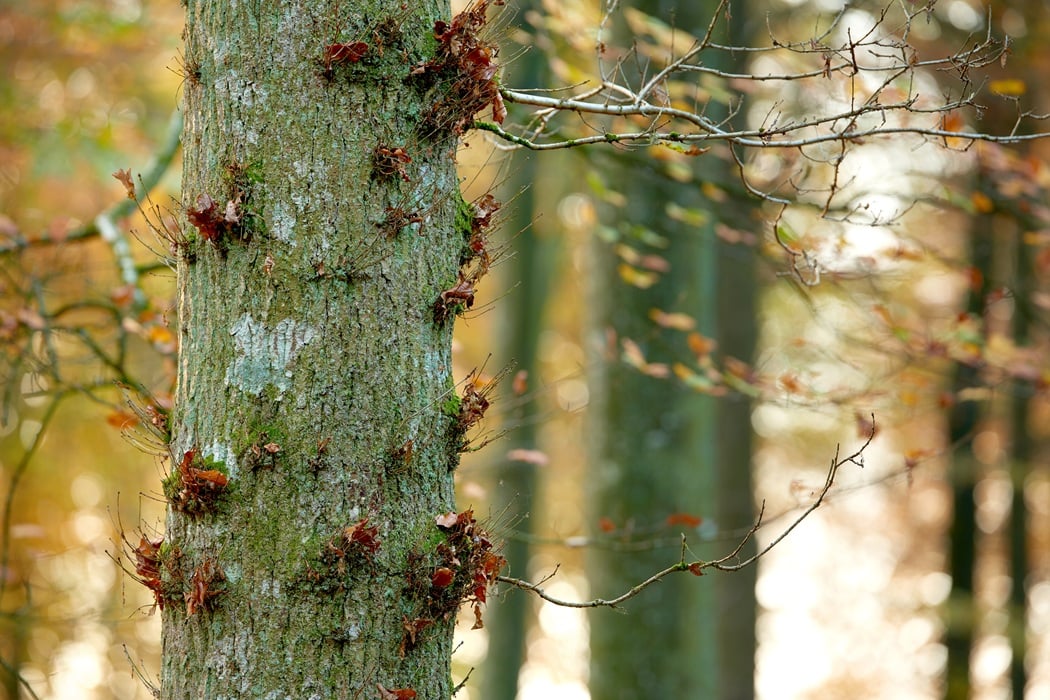
- Excessive sucker growth around the trunk.
- Yellowing or browning foliage.
- Slow annual growth.
- Unusual sap flow.
- Increased woodpecker activity, which often signals insects beneath the bark.
If several of these symptoms appear together, it’s worth scheduling a professional inspection.
How to Reduce Tree Stress and Prevent Pest Problems
Preventing infestations starts with improving tree health.
Water Deeply During Dry Weather
Rather than watering every day, provide slow, deep watering that reaches the root zone. Deep watering encourages stronger root systems that better tolerate drought.
Apply Mulch Correctly
A 2 to 4-inch layer of mulch helps:
- Retain soil moisture
- Moderate soil temperature
- Reduce weed competition
- Improve soil quality over time
Avoid piling mulch directly against the trunk, which can encourage decay and insect activity.
Protect the Root Zone
Limit heavy equipment, vehicle traffic, and excessive foot traffic beneath the tree canopy whenever possible. Healthy roots support healthy trees.
Fertilize Only When Needed
- Many homeowners assume more fertilizer means healthier trees. Actually, excessive fertilizer can stimulate weak, fast-growing shoots that attract certain insects. A professional assessment helps determine whether nutrient deficiencies actually exist.
Prune Properly
Removing dead, damaged, or crossing branches improves airflow and reduces stress. Proper pruning also removes potential insect entry points while encouraging healthier growth.
Schedule Regular Arborist Inspections
Professional inspections often identify stress long before homeowners notice visible decline. Early intervention usually costs far less than treating advanced infestations or removing dead trees.
Frequently Asked Questions
What is the most common cause of tree stress?
The most common causes include drought, improper watering, compacted soil, nutrient deficiencies, construction damage, and extreme weather. Often, several stress factors occur together and gradually weaken the tree.
What causes pest infestations in trees?
Pest infestations usually occur when trees become stressed and their natural defenses weaken. Insects are attracted by chemical signals released by stressed trees and exploit their reduced resistance.
What are the four common categories of tree pests?
Tree pests generally fall into four groups:
- Sap-feeding insects
- Wood-boring insects
- Defoliating insects
- Root-feeding pests
Each affects trees differently and requires specific treatment methods.
Can a stressed tree recover?
Yes. Many stressed trees recover successfully when the underlying problem is identified early. Proper watering, nutrient management, pruning, and targeted pest treatments often restore tree health before permanent damage occurs.
Protect Your Trees Before Small Problems Become Major Ones
Too many homeowners wait until branches begin dying or insects become obvious before seeking professional help. Unfortunately, by then, treatment options may be more limited.
American Tree Experts has been helping New Jersey homeowners protect valuable trees since 1934. With an ISA Certified Arborist, a New Jersey Licensed Tree Expert, and decades of experience diagnosing insect and tree health issues, the team provides practical, science-based solutions tailored to each property’s needs. Whether it’s treating destructive pests like emerald ash borers and hemlock woolly adelgids, improving tree nutrition, or identifying early signs of stress, they focus on preserving trees whenever possible.
If you’ve noticed declining tree health or suspect insect activity, don’t wait for the damage to spread. Contact American Tree Experts today at (973) 744-6091 or email am*******************@***il.com to schedule a professional tree health evaluation.