
If you’re a homeowner in Montclair, NJ, trying to protect your trees from sudden decline, leaf damage, or mysterious infestations, you already know how frustrating it can be to spot problems too late. Tree pests don’t follow a simple schedule, and by the time you notice damage, the issue is often well underway. That’s where proactive monitoring and expert guidance make all the difference, especially when working with experienced arborists who understand local pest cycles and can step in before small issues turn into costly tree loss.
Table of Contents
Understanding Tree Pest Timing in Montclair, NJ
Pests don’t operate on a fixed calendar. They respond to temperature, moisture, and seasonal patterns, which is why arborists in North Jersey rely on Growing Degree Days (GDD) rather than exact dates. Still, for homeowners in Montclair, having a seasonal pest calendar is one of the most practical ways to stay ahead.
Between mature shade trees, dense neighborhoods, and humid summers, local landscapes create ideal conditions for everything from sap-sucking insects to destructive borers.
Winter Tree Pest Checklist (December – February)
During the winter period, the focus is on inspection and dormant control. Winter might feel quiet, but it’s actually one of the most important times to get ahead of pest problems. With leaves gone, you can clearly see issues that would otherwise be hidden.
What to watch for:
- Spotted Lanternfly egg masses: These appear as grey, mud-like smears on bark, fences, or outdoor surfaces. Each mass can contain dozens of eggs that will hatch in spring. In Montclair, they’re commonly found near wooded edges and older properties.
- Scale insect eggs: Often overlooked, they appear as small bumps or crusty patches on the branches of magnolia, holly, and fruit trees. If ignored, they multiply quickly once temperatures rise.
- Emerald Ash Borer (EAB) damage: Look for bark splitting, D-shaped exit holes, and woodpecker activity. Many homeowners miss these early warning signs until the canopy begins thinning months later.
What you can do:
- Scrape egg masses into soapy water or alcohol to destroy them.
- Apply dormant oil treatments to smother overwintering pests.
- Schedule a professional inspection while the tree structure is fully visible.
Many costly spring problems actually begin with issues homeowners didn’t notice in winter.
Early Spring Pest Activity (March – April)
During this time, the focus is on prevention and first emergence. As temperatures begin to rise in Montclair, pest activity ramps up quickly, often before it’s obvious.
Common early spring pests:
- Hemlock Woolly Adelgid: Identified by white, cottony sacs at the base of needles. Left untreated, it can slowly kill hemlocks.
- Pear Psylla: Active in March, especially on ornamental and fruit trees. Produces sticky honeydew that leads to black mold buildup later.
- Eastern Tent Caterpillars: Silky webs begin forming in tree crotches, especially on cherry and apple trees.
- Anthracnose (fungal disease): Causes leaf spotting and early drop, particularly in sycamores and oaks.
Why this window matters:
This is the best time for preventative treatment. Once pests fully emerge and spread, control becomes more reactive and less predictable.
Late Spring Pest Surge (April – May)
During these months, the focus is on larvae, aphids, and feeding damage. This is when pest activity becomes more visible and more aggressive.
Watch for:
- Spongy moth caterpillars: These begin feeding heavily on oaks, maples, and birch, sometimes stripping entire sections of foliage.
- Aphids and mites: Signs include curling leaves, yellowing foliage, and sticky residue that attracts ants and mold.
- Birch and holly leaf miners: Visible as streaks or blotches inside leaves, reducing the tree’s ability to produce energy.
- Emerald Ash Borer emergence: Adult beetles begin appearing, marking a critical treatment window.
Real-world scenario:
This is when many homeowners notice sticky residue on patios, cars, or outdoor furniture. It’s not just a nuisance; it’s a clear sign pests are actively feeding.
Summer Tree Pest Peak (June – August)
During this time, heavy feeding and visible damage are major concerns. This is when most infestations become impossible to ignore.
Major summer pests:
- Spotted Lanternfly (nymphs and adults): These insects feed on sap and leave behind honeydew that turns into black sooty mold. You’ll often see them gathering in large numbers on trunks.
- Japanese beetles: Known for skeletonizing leaves, especially on lindens and ornamentals.
- Bagworms: Start small but grow into large hanging bags that can severely damage evergreens.
- Borers (dogwood, rhododendron, and others): Attack from inside the tree, often going unnoticed until the damage is advanced.
Why summer is risky:
Trees are already dealing with heat stress and limited moisture. Pest pressure during this time can accelerate decline quickly, especially in older or already weakened trees.
Fall Cleanup & Late-Season Threats (September – November)
The focus for this period is prevention for next year. Fall is less about reacting and more about breaking the pest cycle before it starts again.
Key concerns:
- Spotted Lanternfly egg laying. New egg masses were laid for the next season.
- Scale insects Continue feeding and producing honeydew on branches.
- Leaf litter and debris. Can harbor pests and fungal spores through winter.
What to do:
- Remove and dispose of infested leaves and debris.
- Inspect bark and branches for egg masses.
- Plan preventative treatments for the following spring.
Too many homeowners skip this step and end up dealing with the same problems year after year.
Why Timing Matters More Than You Think (GDD Explained)
Tree pests don’t follow dates; they follow temperature. That’s why one year infestations seem early, and the next year they’re delayed. Arborists track Growing Degree Days (GDD) to:
- Predict when pests will emerge
- Time treatments more accurately
- Reduce unnecessary pesticide use
This level of precision is what separates reactive care from proactive tree health management.
Signs Your Trees May Already Be Infested
If you’re noticing any of the following, your trees may already be under stress:
- Leaves with holes, discoloration, or skeletonized patterns.
- Sticky residue or black mold on surfaces below trees.
- Thinning canopy or early leaf drop.
- Webbing, egg masses, or visible insect clusters.
- Bark damage or small exit holes.
Catching these early can prevent long-term damage or complete tree loss.
When to Treat vs. When to Call a Professional
Some minor pest issues can be monitored, but many, especially invasive species and borers, require targeted treatment. If the timing feels confusing or the infestation seems widespread, it’s best to bring in an expert.
American Tree Experts takes a diagnostic-first approach, identifying exactly what’s affecting your trees and applying tailored, environmentally responsible treatments. Their team understands Montclair’s local pest patterns and how to intervene at the right time.
FAQs About Tree Pest Activity in New Jersey
What month are insects most active?
Insects are most active from late spring through summer (May–August) when conditions support rapid feeding and reproduction.
What month is best for pest control?
Early spring (March–April) is ideal for prevention, while summer treatments address active infestations.
When should you spray pesticides in NJ in the spring?
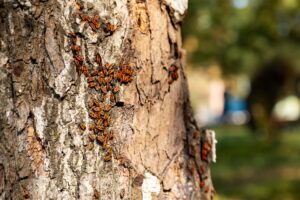
Timing depends on the pest, but generally before or during early emergence, which is often based on temperature trends rather than a specific date.
Final Thoughts: Stay Ahead of Tree Pests in Montclair
Tree pests are a year-round concern in Montclair, not just a seasonal inconvenience. Staying ahead means understanding when pests appear, what signs to watch for, and when to act.
If you’re unsure what’s affecting your trees or want a professional evaluation, American Tree Experts is here to help. With decades of experience and deep knowledge of North Jersey landscapes, they can identify problems early and protect your trees over the long term. For more information, call at (973) 744-6091 or email am*******************@***il.com